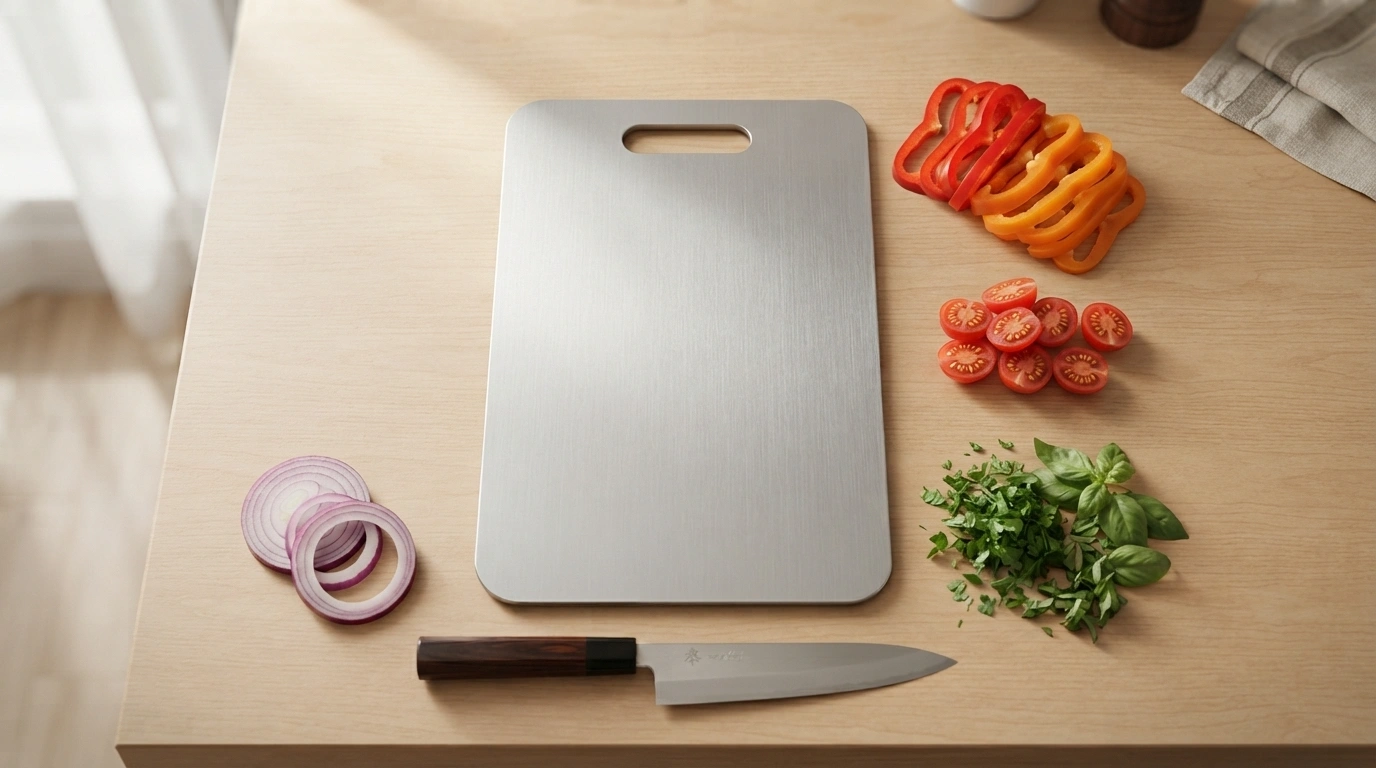
A titanium cutting board is a kitchen cutting surface made from titanium alloy instead of wood, bamboo, plastic, or glass. It’s non-porous (so it doesn’t trap bacteria or odors), naturally scratch- and stain-resistant, and — despite being a metal — engineered to be gentle enough on knife edges for daily use. The main trade-offs are a higher price and a different feel and sound compared to a wood or plastic board.
If you’ve been using the same wood or plastic cutting board for a few years, there’s a decent chance it has knife grooves you can’t fully clean, and there’s a real body of food-safety research showing those grooves can harbor bacteria even after washing. Titanium boards exist specifically to solve that problem — but they’re not automatically the right choice for everyone. This guide breaks down how they actually perform, where they fall short, and what to look for if you decide to buy one.
What Is a Titanium Cutting Board, Exactly?
It’s a rigid cutting surface machined or stamped from titanium alloy, usually 2–4mm thick, often with a slightly textured or brushed finish to reduce knife slip.
Titanium is the same family of metal used in surgical implants and aerospace parts — chosen there for the same properties that matter in a kitchen: it doesn’t corrode, doesn’t react with acids the way some metals do, and holds its shape under repeated stress. In cutting board form, most models are double-sided (so you can flip it and use a clean face), lightweight relative to their size, and finished with rounded edges or a handle cutout for storage.
It’s worth being precise about the material claim, since this is an area where marketing tends to overstate things: “pure titanium” boards are typically a titanium alloy (often similar to Grade 1 or Grade 2 titanium used in commercial products), not a solid block of aerospace-grade titanium. That’s not a downside — alloyed titanium is what makes the board affordable and workable — but it’s worth knowing what the term actually means before you pay a premium for the word “pure.”
Titanium vs. Wood, Plastic, Glass & Bamboo
Titanium beats wood and plastic on hygiene and beats glass and stone on knife-friendliness — it’s the only common material that doesn’t force a trade-off between the two.
| Wood | Plastic | Glass / Stone | Titanium | |
|---|---|---|---|---|
| Non-porous / hygienic | ✗ | ✗ | ✓ | ✓ |
| Knife-friendly | ✓ | ✓ | ✗ | ✓ |
| Resists stains/odors | ✗ | ✗ | ✓ | ✓ |
| Dishwasher-safe (most models) | ✗ | ✓ | ✓ | ✓ |
| Typical lifespan | 1–3 yrs | 1–2 yrs | 3–5 yrs | Years+ |
Wood has real upsides — it’s kind to knives and feels good to cut on — but it’s porous, meaning liquid and bacteria can work into the grain, and it needs periodic oiling to avoid cracking. Plastic is cheap and dishwasher-safe, but every cut leaves a micro-groove, and those grooves are exactly where bacteria survive a normal wash. Glass and stone solve the hygiene problem but are hard enough to dull a blade noticeably faster than any other common material. Titanium is the one material on this list that doesn’t ask you to pick a side.
Does a Titanium Cutting Board Dull Your Knives?
No — a properly made titanium board is engineered to be softer than a steel blade’s edge, so it shouldn’t dull or chip knives with normal home use.
This is the single most common concern people have before buying, and it’s a fair one — most people’s mental model of “metal cutting surface” is a butcher’s steel table, which absolutely does wreck knife edges. Titanium boards work differently: the alloy is processed to sit below the hardness of standard kitchen knife steel, so the blade cuts into the surface slightly rather than skating across it and grinding down. That said, quality varies between brands, and a poorly finished or overly hard board can behave more like stainless steel. If knife preservation is your top priority, look specifically for boards that state they’re finished to be blade-safe, not just “titanium.”
Is It Safe to Cut Raw Meat On?
Yes, and arguably safer than wood or plastic — because the surface has nowhere for bacteria to hide, a normal wash actually removes what landed on it.
The food-safety concern with raw meat isn’t the cutting itself, it’s cross-contamination from a surface that doesn’t fully clean between uses. On a grooved plastic or porous wood board, washing removes surface bacteria but can leave residue trapped below the visible surface. Titanium’s non-porous face means there’s nowhere for that residue to hide — hot water and soap reach the entire surface. Many titanium boards are also double-sided specifically so you can dedicate one face to raw protein and the other to produce, which is good practice regardless of material.
Where Titanium Wins
- Non-porous — nothing to trap bacteria or odors
- Resists scratches, stains, and warping
- Knife-friendly despite being metal
- No oiling or special maintenance
- Typically dishwasher-safe
Where It Falls Short
- Higher upfront cost than wood or plastic
- Different sound/feel when cutting — takes adjustment
- Quality varies a lot between brands
- Not ideal as a serving board (metal look isn’t for everyone)
- Overkill for very light/occasional cooking
How Do You Clean and Maintain One?
Wash with warm water and mild soap, dry with a cloth, and avoid abrasive scouring pads — that’s the entire maintenance routine.
This is where titanium’s simplicity really shows. Wood boards need periodic mineral oil to prevent cracking; plastic boards technically need replacing every year or two once grooves accumulate. Titanium needs neither — a quick rinse or a run through the dishwasher (check the specific product’s care instructions, since some models have wood or silicone accents that aren’t dishwasher-safe) is sufficient. The one thing to genuinely avoid is steel wool or heavy-grit scouring pads, which can leave fine scratches on the surface finish over time, even though they won’t compromise the board’s function.
How Long Does a Titanium Cutting Board Actually Last?
Manufacturers commonly advertise “lifetime” durability. That’s a reasonable expectation for the material resisting cracking or warping, but it’s a marketing claim, not a guarantee — treat it the way you’d treat any “lifetime” claim on a consumer product.
Titanium genuinely doesn’t degrade the way wood and plastic do — it won’t warp from moisture, crack from drying out, or develop the deep grooves that make plastic boards need replacing. In that sense, “lasts far longer than wood or plastic” is a fair, evidence-based claim. Whether it truly lasts “a lifetime” depends on the specific product’s build quality and how it’s handled — dropping any rigid board on a hard floor repeatedly can bend or dent it. A board that’s several millimeters thick from a reputable maker is a reasonable bet for years of daily use; a very thin, unbranded version is a bigger gamble.
Who Should (and Shouldn’t) Buy One
A titanium cutting board makes the most sense if you cook multiple times a week, want to cut down on plastic in your kitchen, or have been frustrated by boards that stain, smell, or dull knives. It makes less sense if you cook rarely, are working with a tight budget, or specifically want the classic feel of cutting on wood — no material fully replicates that.
Where to Find One
We currently point readers to the Katori Titanium Cutting Board, which matches the specs covered in this guide — double-sided, knife-friendly, non-porous titanium construction.
Check Current Price →Frequently Asked Questions
Is a titanium cutting board worth buying?
For most people who cook regularly, yes — the higher upfront cost is offset by not needing to replace the board for years, and the non-porous surface is genuinely easier to keep hygienic than wood or plastic. It’s a weaker choice if you rarely cook or are on a tight budget, since a basic plastic board still does the job adequately for light use.
What is the downside of a titanium cutting board?
The two most common trade-offs are price (titanium boards typically cost more than wood or plastic) and the sound and feel of cutting on metal, which some people find takes a few uses to get used to.
How do I choose a titanium cutting board?
Check the grade of titanium used, the board’s thickness (thin boards can flex under pressure), whether it’s double-sided, and the actual dimensions against your counter and sink space before buying.