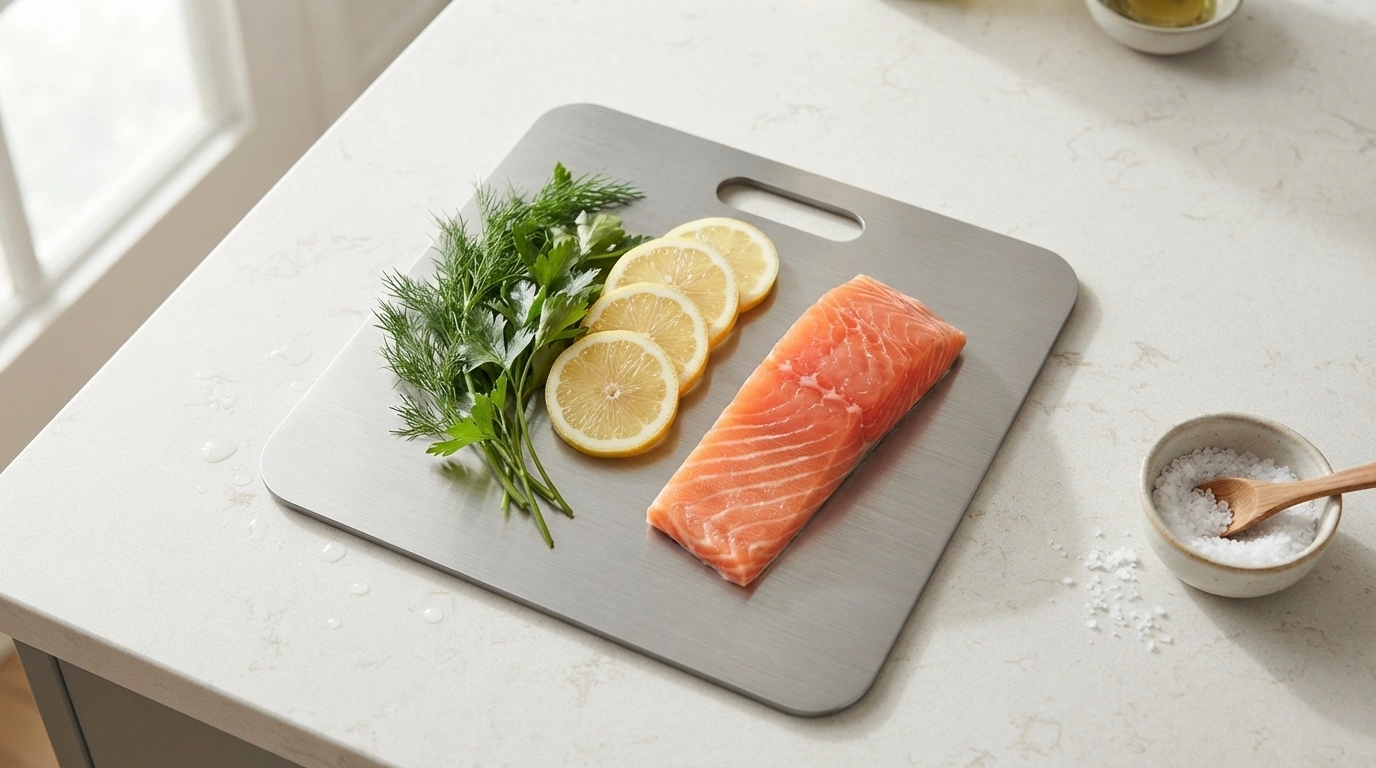
Yes. Titanium is chemically inert, doesn’t react with acids or leach chemicals into food, and contains no BPA or plastic by nature of being a solid metal. It’s widely used in food-processing equipment and surgical implants specifically because the body and food don’t react with it. True titanium sensitivities exist but are rare.
“Is this safe?” is a fair question to ask about any material that touches your food daily, especially one most people associate with aerospace parts rather than kitchenware. The short version is that titanium’s safety profile is well established outside the kitchen — it’s what this section actually walks through, along with the few situations where caution is still warranted.
Why Titanium Is Considered Food-Safe
Titanium forms a stable oxide layer on its surface that makes it highly resistant to corrosion and chemical reactions — the same property that makes it safe for long-term use inside the human body.
Titanium is used in medical implants, surgical instruments, and food-processing equipment for the same underlying reason: it doesn’t corrode, doesn’t rust, and doesn’t react with acids, salts, or the enzymes in raw food the way some metals do. That chemical stability is what keeps it from leaching anything into what you’re cutting — unlike, say, an old aluminum pan reacting with tomato sauce.
Is It Actually BPA-Free?
Yes — but it’s worth understanding why, rather than just taking the marketing claim at face value.
BPA (bisphenol A) is a chemical used in the manufacturing of certain plastics and resins — it has nothing to do with metal. A solid titanium board doesn’t contain BPA for the same reason a stainless steel spoon doesn’t: the material itself isn’t plastic. So while “BPA-free” is technically accurate on titanium products, it’s a bit like advertising a steak as “gluten-free” — true, but true by default for the entire material category, not something the brand specifically engineered.
What About Allergies or Metal Sensitivity?
Documented titanium allergies are uncommon, and most of the clinical literature on them relates to long-term implant contact (like dental or orthopedic implants), not the brief surface contact involved in food prep. If you have a known nickel or metal allergy, it’s worth noting that titanium is generally considered one of the more hypoallergenic metals used in consumer products — but if you have a diagnosed sensitivity, checking with a doctor before regular kitchen use is still a reasonable precaution rather than an unnecessary one.
Why It’s Considered Safe
- Chemically inert — doesn’t react with food
- No plastic, so inherently BPA-free
- Used in medical and food-processing equipment
- Doesn’t corrode or rust with normal use
When to Double-Check
- You have a diagnosed metal allergy or sensitivity
- The product doesn’t specify food-grade titanium
- Buying a very cheap, unbranded listing with no material info
- You need a specific food-safety certification for professional use
How It Compares to Other Materials on Safety
| Plastic | Wood | Titanium | |
|---|---|---|---|
| Contains BPA (some types) | Possible | ✗ | ✗ |
| Sheds microplastics | ✓ | ✗ | ✗ |
| Reacts with acidic food | ✗ | ✗ | ✗ |
| Traps bacteria in grooves | ✓ (over time) | ✓ (over time) | ✗ |
None of the common cutting board materials are inherently dangerous when used and cleaned properly — the differences here are about degree, not safe versus unsafe. Titanium’s advantage is that it removes several of the smaller, cumulative risk factors (microplastics, trapped bacteria, chemical reactivity) rather than solving one dramatic problem the others don’t have.
Looking for a Food-Safe Option?
We currently point readers to the Katori Titanium Cutting Board — non-porous, BPA-free, food-grade titanium construction.
Check Current Price →Frequently Asked Questions
Is titanium safe to cut food on?
Yes. Titanium is chemically stable, doesn’t react with acidic foods, and doesn’t leach chemicals into what you’re cutting, which is why it’s also used in surgical implants and food-processing equipment.
Does titanium contain BPA?
No. BPA is a chemical used in some plastics, not metals, so a solid titanium cutting board doesn’t contain it at all — this is a structural feature of the material, not a marketing claim specific to any brand.
Can you be allergic to a titanium cutting board?
True titanium allergies are extremely rare and mostly documented in the context of long-term implant contact, not brief food-prep contact. If you have a known metal sensitivity, it’s still worth checking with a doctor before regular use.